
Managing this movement efficiently requires precise coordination between plant teams, transporters, and logistics planners. However, when visibility into vehicle movement is limited, even well-planned dispatch schedules can quickly lose alignment.
This is where automotive fleet tracking becomes critical. With the help of real time fleet tracking and connected logistics software, operations teams can monitor vehicle movement across multiple dispatch points and ensure that finished vehicles reach their destinations without unnecessary delays.
The Complexity of Multi-Location Dispatch
Automotive OEMs often dispatch vehicles from several manufacturing facilities simultaneously. These vehicles may move toward different destinations including regional stockyards, distribution hubs, or directly to dealerships.
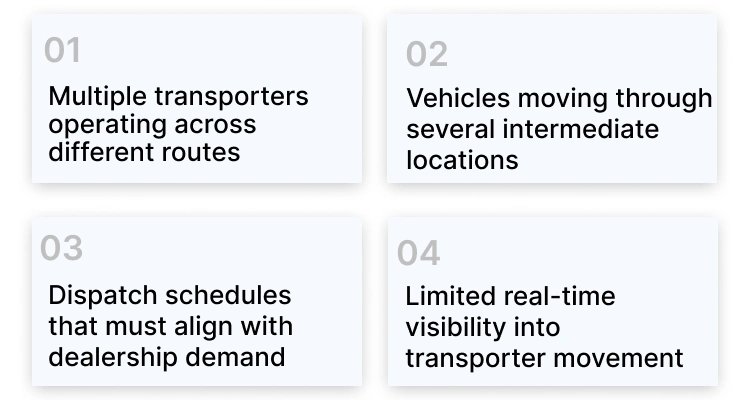
Limited real-time visibility into transporter movement
Without a centralized fleet tracking platform, operations teams often rely on manual updates or transporter communication to track vehicle progress.
This lack of visibility makes it difficult to quickly identify delivery delays, route deviations, or transporter inefficiencies.
Why Real-Time Tracking Changes Dispatch Planning
Traditional dispatch systems often provide static shipment information but lack the ability to monitor movement continuously. Automotive logistics today requires something more dynamic.
A real time vehicle tracking system allows dispatch teams to see where every transporter is, how far it has progressed on its route, and whether the delivery timeline is still achievable.
With a gps vehicle tracking system and fleet telematics software, logistics teams can:
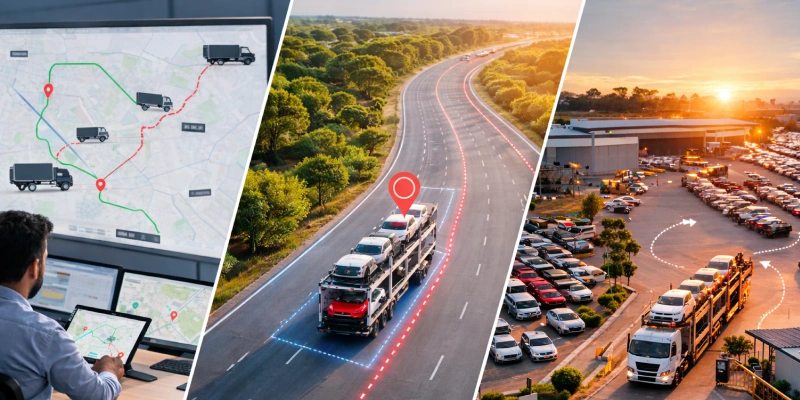
Improve coordination with destination yards or dealerships
This visibility allows dispatch planners to adjust schedules proactively instead of reacting after delays occur.
Improving Coordination Across Plants and Yards
Vehicle movement between plants and yards is a common part of automotive logistics. However, without an integrated view of operations, coordination across these facilities becomes difficult.
For example, a regional yard may prepare for incoming vehicles based on estimated arrival times. If transporters are delayed but the yard has no visibility into vehicle movement, parking space allocation, unloading schedules, and inspection planning can all be affected.
By integrating fleet tracking software with yard management systems and plant logistics management systems, automotive companies can maintain better synchronization between dispatch and receiving operations.
Such integration allows logistics teams to view live fleet tracking data alongside yard capacity and inbound vehicle schedules, improving overall coordination.
Transporter Network Visibility
Most automotive OEMs rely on a large network of transporter partners to move finished vehicles. While this expands logistics capacity, it also introduces operational variability.
Different transporters may operate with different standards, driving practices, or route planning methods.
A fleet telematics system helps OEMs maintain better oversight across this network. With tools like vehicle telematics software and fleet tracking solutions, operations teams can monitor transporter performance across key metrics such as:
Delivery consistency
Adding video telematics solutions and vehicle dashcam software further improves operational visibility by providing contextual insights into on-road events.
These insights support better transporter collaboration and more consistent delivery performance.
Data-Driven Dispatch Optimization
As vehicle movement data accumulates across multiple dispatch operations, it becomes possible to extract valuable insights that improve logistics planning.
Using logistics analytics platforms and ai fleet analytics, automotive companies can evaluate historical movement patterns across routes and transporters.
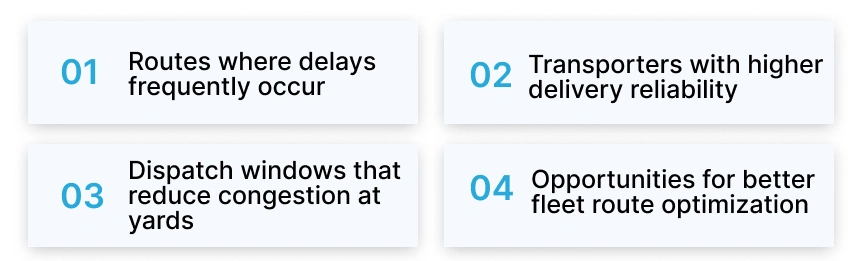
Opportunities for better fleet route optimization
By combining data driven logistics software with route optimization solutions, OEMs can improve dispatch efficiency and reduce unnecessary transit delays.
Over time, this leads to more predictable vehicle movement across the supply chain.
Centralized Visibility Through Logistics Control Towers
As automotive logistics networks expand, many OEMs are adopting centralized monitoring systems such as logistics control towers or transportation control towers.
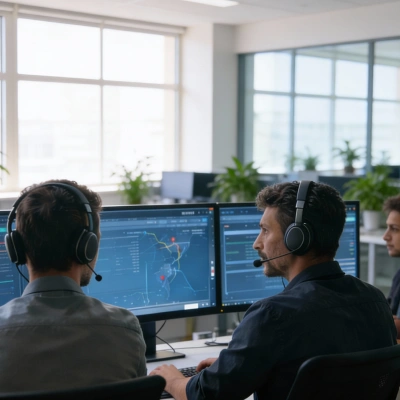
supply chain visibility software
A fleet control tower provides a single operational interface where dispatch teams can monitor transporter activity across all plants and delivery routes.
In some cases, organizations also adopt a managed control tower approach where dedicated teams continuously monitor logistics operations and respond to disruptions in real time.
This centralized oversight significantly improves coordination across multi-location dispatch networks.
Conclusion
Multi-location dispatch is a defining characteristic of modern automotive logistics. Vehicles must move efficiently between plants, yards, and dealerships while maintaining strict delivery timelines.
Without real time fleet tracking and connected logistics platforms, these movements become difficult to manage and delays become harder to prevent.
By adopting fleet telematics systems, gps vehicle tracking systems, and data driven logistics tools, automotive OEMs can gain continuous visibility into vehicle movement and improve dispatch coordination across their entire logistics network.
In a complex distribution environment, connected fleet tracking systems help transform vehicle dispatch from a reactive process into a well-coordinated and predictable operation.