
In automotive manufacturing, precision in production is only half the battle. Once vehicles leave the assembly line, they enter a complex logistics network involving yards, transporters, distribution hubs, and dealerships. Without real-time vehicle movement visibility, even the most efficient production schedules can quickly face disruption.
For many OEMs, vehicles often disappear into a logistical “blind spot” between plant dispatch and dealership arrival. Delays, yard congestion, or transporter inefficiencies remain invisible until someone raises an alarm. This lack of visibility creates operational uncertainty across the finished vehicle supply chain.
Achieving real time vehicle tracking is no longer just about location tracking. It is about creating a connected ecosystem where vehicle movements, transporter activity, and yard operations are continuously visible and measurable.
The Visibility Gap in Finished Vehicle Logistics
Finished vehicle logistics involves a highly coordinated chain of events. Vehicles move from assembly lines to plant yards, then onto car carriers, and finally through regional distribution networks before reaching dealerships.
Yet many OEMs still depend on manual reporting, transporter calls, and delayed updates to understand where vehicles actually are.
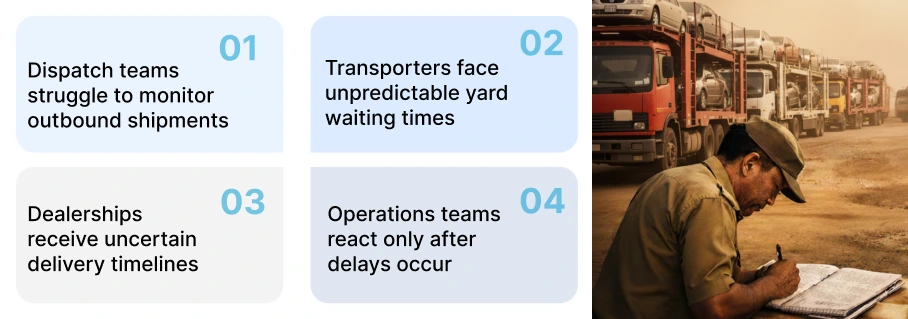
Operations teams react only after delays occur
Without live vehicle tracking or a centralized fleet tracking platform, every movement becomes harder to predict and manage.
A connected logistics platform changes this dynamic by enabling real time fleet tracking across the entire dispatch network, providing a unified operational view.
Why Real-Time Visibility Matters in Automotive Logistics
Automotive OEMs manage thousands of vehicles moving simultaneously across multiple regions. A small delay in dispatch or transit can quickly ripple across the network.
Real time fleet tracking enables operations teams to monitor vehicle movements as they happen, ensuring that any deviations from planned routes or schedules are detected early.
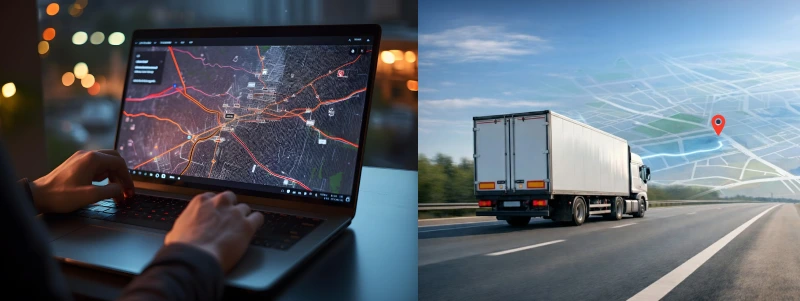
For example:
If a transporter deviates from the planned route, geofencing software can immediately flag the deviation.
If a truck carrying finished vehicles stops unexpectedly, gps telematics systems can alert the operations team.
If transit delays occur due to traffic or road disruptions, fleet route optimization software can support quick re-routing decisions.
These capabilities allow OEMs to move from reactive logistics management to proactive control.
Connecting Plant Operations with Logistics Visibility
Vehicle movement visibility should ideally start inside the plant itself. Before vehicles even leave the facility, several operational steps influence dispatch efficiency.
Gate operations
Without an integrated plant logistics management system, these processes often operate in silos. Dispatch delays occur when vehicles cannot be located in large yards or when transporters arrive before vehicles are ready.
Modern in plant logistics software and yard management systems provide digital visibility into vehicle positioning and yard movements.
By integrating factory logistics software with external fleet telematics solutions, OEMs can ensure that vehicle visibility continues seamlessly beyond the plant gates.
Transporter Visibility: A Critical Piece of the Puzzle
Transporters play a vital role in finished vehicle distribution. However, OEMs often have limited visibility into transporter activity once vehicles are dispatched.
A robust fleet telematics system enables OEMs to monitor transporter movement, speed, and route adherence.
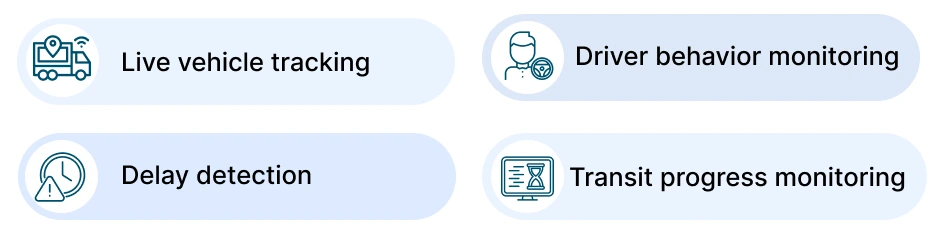
Delay detection
In addition, video telematics software and vehicle dashcam software can provide contextual insights into driving behavior and on-road events. This not only improves safety but also reduces disputes during incidents.
For OEMs managing large transporter networks, such visibility supports better coordination and improved accountability.
From Tracking to Intelligent Logistics Decisions
Real-time tracking alone is not enough. The real advantage lies in turning movement data into operational intelligence.
With the support of data driven logistics tools and ai fleet analytics, OEMs can analyze patterns across dispatch and transit operations.
How can dispatch planning improve transporter utilization'
Using a logistics analytics platform, operations teams can convert tracking data into actionable improvements.
Over time, ai powered logistics platforms can also support predictive planning by identifying potential delays before they impact deliveries.
The Role of Logistics Control Towers
As automotive supply chains grow more complex, many OEMs are adopting centralized monitoring frameworks such as a logistics control tower or transportation control tower.

vehicle tracking systems
A fleet control tower creates a single operational dashboard where teams can monitor vehicle movements across plants, transporters, and dealer networks.
When integrated with a managed control tower, it also enables centralized oversight of logistics operations across multiple locations.
This level of operational visibility significantly reduces decision delays and improves coordination across stakeholders.
Building a Connected Automotive Logistics Ecosystem
The future of automotive logistics lies in connected and data-driven operations. Instead of relying on fragmented systems and delayed updates, OEMs are increasingly adopting connected logistics software that integrates multiple operational processes.

supply chain monitoring systems
Together, these technologies form a connected logistics platform where vehicle movements, transporter activity, and dispatch operations become continuously visible.
This transformation enables OEMs to achieve not only real time vehicle tracking, but also better operational control across the entire finished vehicle supply chain.
Conclusion
For automotive OEMs, visibility in finished vehicle logistics is becoming just as important as efficiency in manufacturing. Vehicles that cannot be tracked in real time create operational blind spots that lead to delays, coordination challenges, and reduced supply chain confidence.
By adopting real time fleet tracking, vehicle telematics solutions, and connected logistics platforms, OEMs can bring clarity to vehicle movement across plants, yards, transporters, and dealer networks.
When logistics operations are supported by data driven logistics software and intelligent fleet tracking systems, decisions become faster, coordination improves, and finished vehicles move through the supply chain with far greater predictability.