Fleet monitoring has been around for years—tracking vehicle locations, fuel usage, and driver performance. But today’s logistics environment demands more than dots on a map. Traditional fleet monitoring systems provide visibility, but they often stop at information. The Managed Control Tower (MCT) goes a step further, acting as a digital command center that not only monitors but also intervenes, escalates, and resolves issues in real time.
So, what really sets the two apart' Let’s break it down.
Traditional Fleet Monitoring: The Limitations
A standard fleet monitoring setup focuses mainly on tracking and reporting. While useful, it leaves gaps in areas critical to modern logistics:
Reactive Operations – Issues like accidents or route deviations are only reported after they’ve occurred.
Data Overload – Managers are flooded with alerts but lack tools to prioritize them.
Limited Accountability – Accident disputes and compliance gaps remain unresolved.
Fragmented Communication – Escalations often happen via manual calls, leading to delays and errors.
In short, traditional monitoring tells you what went wrong but doesn’t help prevent it—or resolve it efficiently.
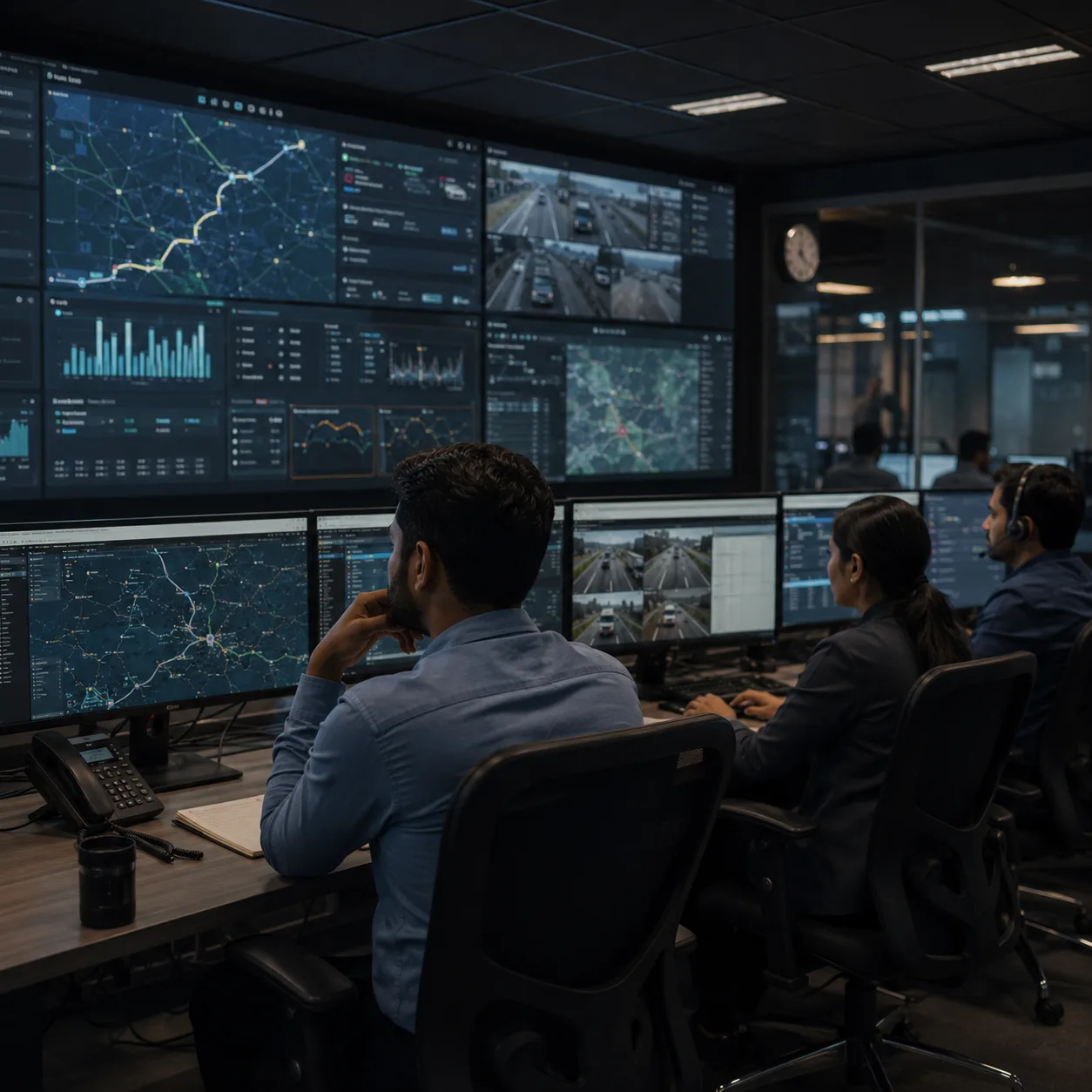
Managed Control Tower: The Next Step in Fleet Oversight
The Managed Control Tower solution is designed to go beyond visibility. By combining AI-backed monitoring, smart alerts, SOP-driven workflows, and cloud manpower, it transforms monitoring into end-to-end fleet management.
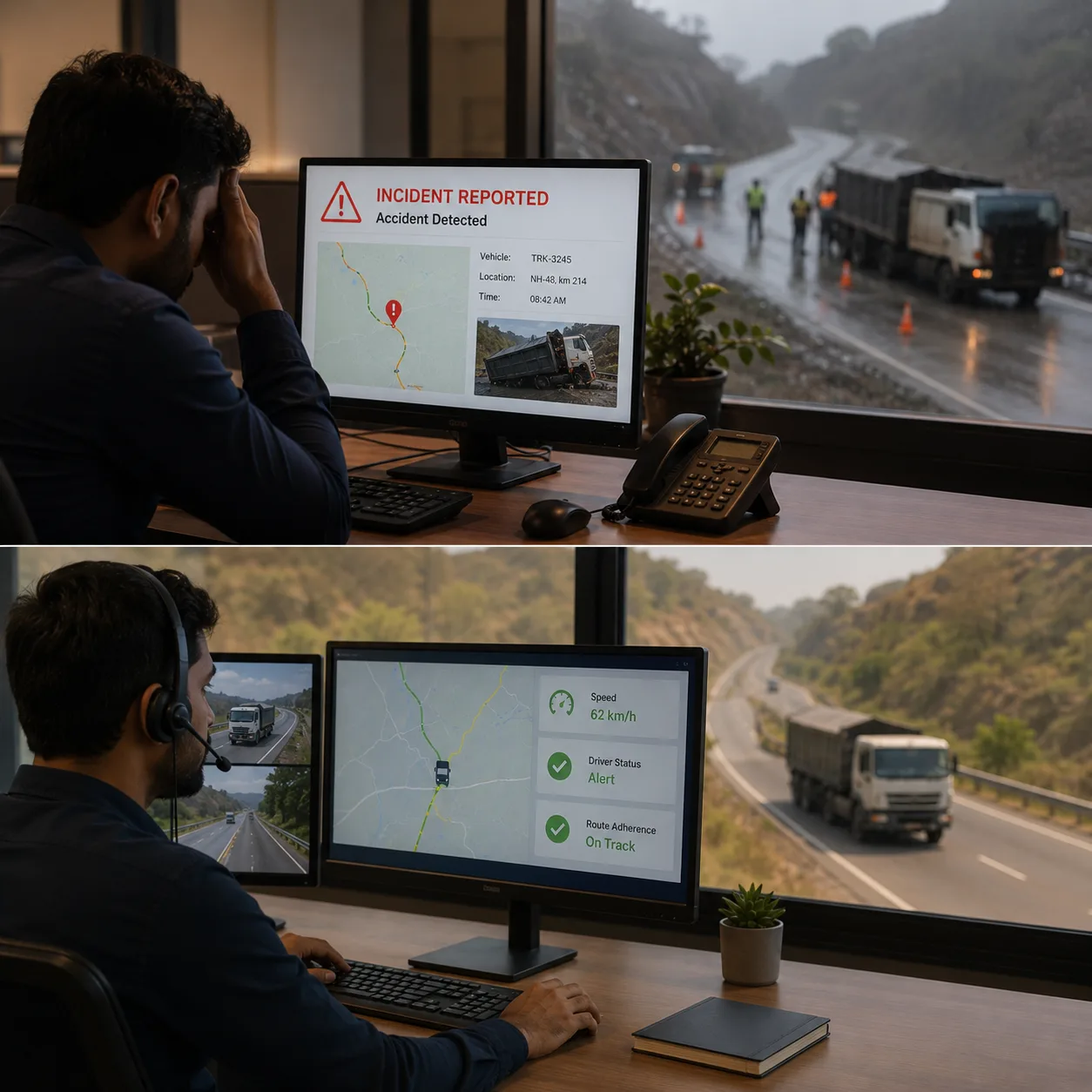
Proactive vs. Reactive
Traditional: Informs you after an incident.
MCT: Intervenes in real time to prevent accidents, enforce compliance, and resolve deviations.
Smart Ticketing Layer
Traditional: Bombards managers with repetitive alerts.
MCT: Pools similar alerts and flags only critical deviations, reducing alert fatigue.
AI + Human Synergy
Traditional: Relies solely on tech dashboards.
MCT: Combines AI-enabled monitoring with 24x7 cloud manpower to handle first-level escalations.
Integrated Dashboard
Traditional: Scattered reports across platforms.
MCT: A single dashboard logs alerts, interventions, communications, and resolutions.
Accountability
Traditional: Limited insights into root causes of accidents or delays.
MCT: Provides instant visibility and traceability, ensuring stakeholders are accountable.
Why the Difference Matters
In an industry where missed trips, downtime, and accidents directly cut into profitability, having a system that merely reports isn’t enough. The Managed Control Tower delivers:
Higher fleet utilization through smarter scheduling.
Safer operations via proactive interventions.
Reduced overhead thanks to SOP-driven workflows and cloud manpower.
Seamless communication with stakeholders via WhatsApp, IVR, or SMS.
It’s not just monitoring—it’s management at scale with precision.
Conclusion
Traditional fleet monitoring shows you the past. The Managed Control Tower shapes the present and prepares you for the future. By turning data into real-time action, it ensures every trip is safer, more efficient, and more profitable.
If you’re still relying on traditional monitoring, the question isn’t whether to upgrade—but how soon you can.
CTA
Bring Precision to Every Movement Upgrade from traditional monitoring to Axestrack’s AI-powered Managed Control Tower—where visibility meets real-time control.